

A Walk on the Wild Side: Two Book Reviews

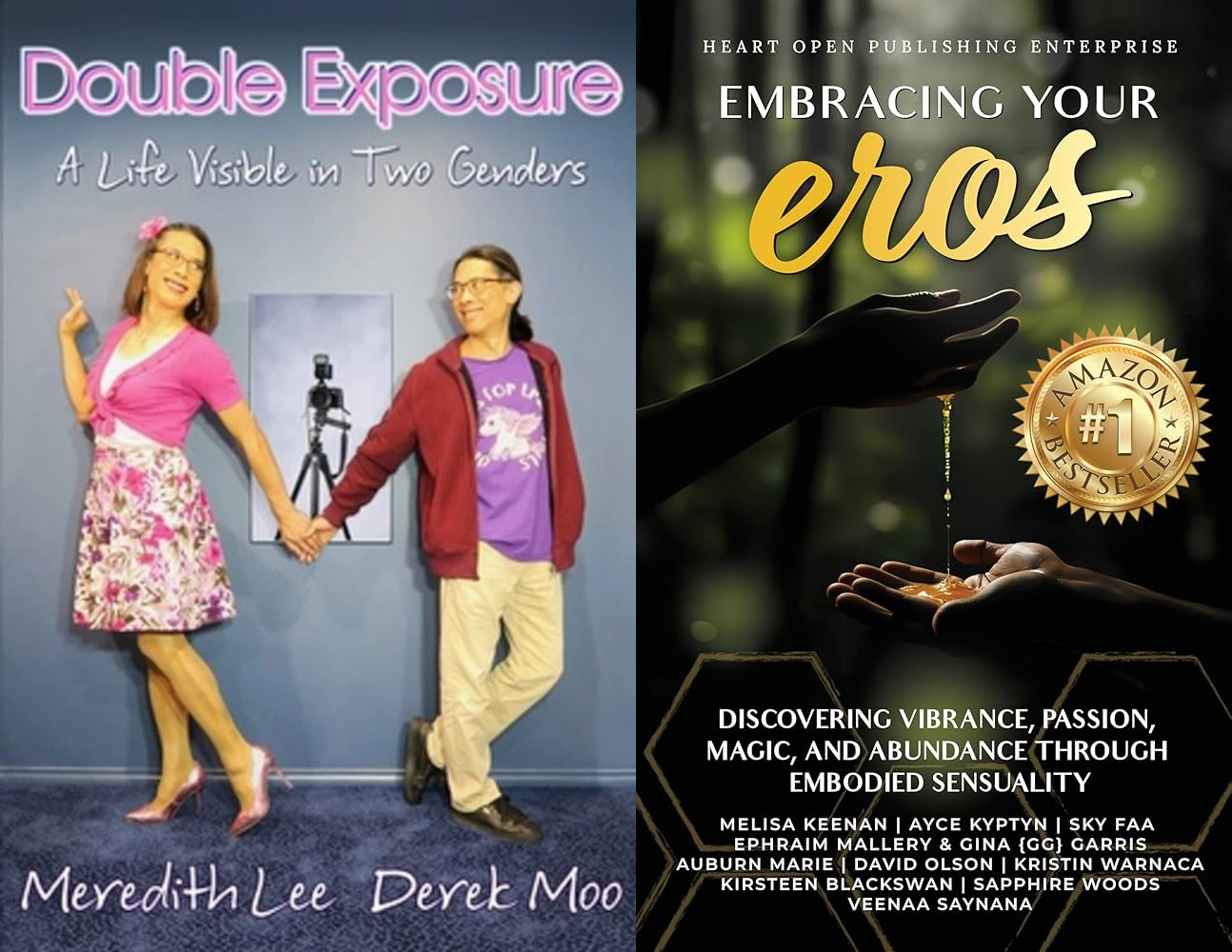 It is inevitable after decades of living a Bohemian lifestyle that one is going to meet some colourful characters, and I don't just mean poets and artists, although they make up a fair portion of our subjects. It's the queers that I speak of, those for whom their assumed gender doesn't match their sense of self, those who are same-sex attracted, those who practise ethical non-monogamy, those who have kinks and fetishes, and, of course, the sex-workers. My political sensibilities have always advocated respecting such choices, and my personal sense has been toward a sympathetic understanding. Too often, attempts to psychologise or apply sociological explanations to such people become prescriptive, denying their individuality and agency, and sometimes are downright cruel. But one sociological fact is certain: both transgender people and sex workers are two groups that are subject to discrimination and violence, even in those societies where they have formal legal protection and equality. It is with this in mind that I'm writing two short reviews from friends of mine: "Double Exposure: Life in Two Genders" by Meredith Lee and Derek Moo, and a chapter of "Embracing Your Eros" by Sapphire Woods.
A substantial book at over 450 pages, in "Double Exposure" we see the development of a person who describes themselves as a "dual gender". Part of their life is as Derek, a "daggy family dad", with a wife and two children, a tinkerer who, increasingly aware of their very strong feminine side, discovered Meredith, a part of their personality that is highly social, fashionable, and beautiful. Breezily written, the autobiography nevertheless covers the protagonists' development, the very real practical and emotional challenges involved in changing their gender expression as well as increasingly 'coming out' to friends, family, and colleagues. With plenty of stories to tell, a life's narrative is built that includes character development, conflict and challenges, and the thematic concerns of how one becomes steadfastly autonomous in their own authentic development, whilst retaining a great deal of genuine sensitivity to the concerns of others. Smart and insightful, the book is full of recommended resources for others experiencing related gender issues.
The second book being reviewed here is a compilation of well over twenty authors, each submitting an essay of around a dozen pages on the common theme of how they discovered their own sexual and sensual expression; you can do the math to work out the page count. Of the authors, I only know one, Sapphire Woods, whose autobiographical essay, presented in a storytelling style, is based on the idea that "releasing [the] collective shame around sex work sets us free". Sapphire's writing and expression is very much based around an enchanted world version of the world's oldest profession, replete with premodern words like "divine", "sacred", and "spiritual", also noting how far life has moved from celebrating the sensual. Sapphire's own journey in this narrative and theme involved recognising that any sense of shame came from external sources, the same external sources that both condemned and pitied the whore (an attitude which is still common among self-identified feminists), whilst carrying a whole range of patriarchal sexual social pathologies. For Sapphire, a very significant part of the role that they claim is one of a healer, very aware of the less savoury elements of the work, very politically astute, but also forthright in reminding all that sex workers are everywhere. As for the rest of the book, I will venture to say that it consists of numerous stories of how people have come to discover themselves, sometimes from fairly harrowing experiences. Rather like "Double Exposure", "Embracing Your Eros" is an easy read in terms of style, and credit must be given to the editors of both works.
On that note, I must note that neither of these books is particularly to my style of reading, even when the content itself is challenging. I can certainly recommend both books to most people, but I wouldn't necessarily recommend them to myself; I know the sort of book that I like, and it's not the autobiography. Hyper-consise scientific journal articles on climate physics? Ponderous tomes on German critical theory? Mind-bending Taoist koans with extensive commentary and analysis? Technical documentation for shell scripting and parallel programming in a high performance computing environment? Those are my sort of books, and I readily recognise that this is certainly not everyone's idea of what to read on a rainy Sunday afternoon. And you know what? That's OK. What is common to the stories of Derek-Meredith and Sapphire is the recognition that we have to learn not just to tolerate diversity, but to accept it within the limits of universal norms. Because ultimately, this is just how people are making sense of the world, their experiences, and how they express themselves. We have a better, more interesting world because of Derek-Merediths and Sapphires, and I am both pleased and proud to consider these individuals loyal and good friends.
File Attachments:

- lev.lafayette's blog
- Log in to post comments