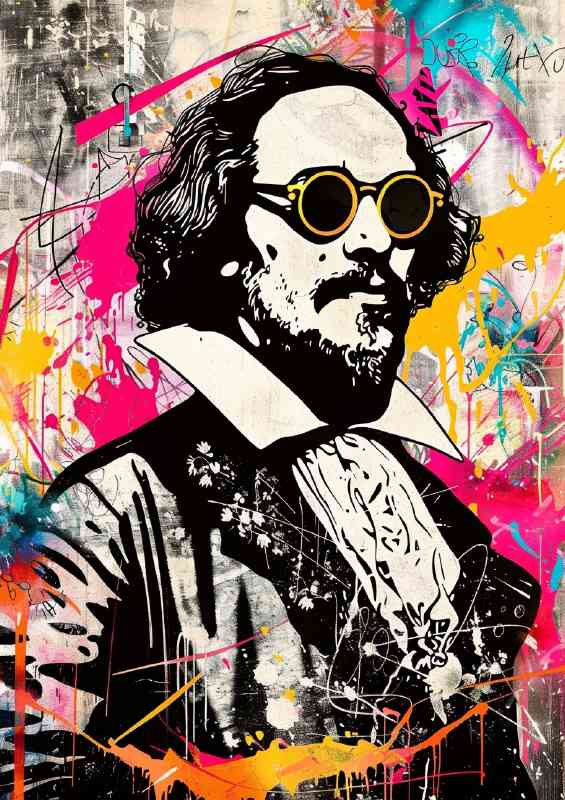
 Over the past few weeks, I've had the opportunity to attend a few Shakespearean-related events. On Saturday, July 19, I hosted "A Midwinter Day's Awakening", replete with Shakespearean readings, people in appropriate costume (I quite enjoy the role of being the wizard Prospero), Elizabethan music, and some impressive operatic singing (thank you, Angela L). Several days later, on July 27, Justine M., Simon S., Kate R., and I ventured to the Fairfax at the Arts Centre to see Bell Shakespeare put on their performance of "Coriolanus", a marvellous take of arrogance, betrayal, and vengeance. which has been very well received, which has not been performed outside of the UK since 2000. Peter Carroll provided an especially superb peformance as the elder statesman Menenius and, as one would hope, Hazem Shammas provided a very fine Coriolanus.
Continuing on the theme, Kate and I delved into a viewing of Julie Taymor's "Titus", a violent, indulgent, and surreal piece of work with Anthony Hopkins and Alan Cumming being particularly excellent in their performance. Then, a few days later, Martin P., took me out to the Brighton Palace to see a pre-release screening of "Mr. Burton", which involves the days of Richard Burton at the start of his career and his friendship (and eventual adoption) by the teacher, director, and producer, Philip Burton. Strictly not a Shakespeare performance, it makes a multitude of direct references to The Bard, and is very notable for its emotional depth, and portrayal of poverty among the Welsh working-class. Finally, I have Luhrmann's 1996 "Romeo + Juliet" on order to re-watch, notable for its 1990s "crass, violent and superficial" setting, which juxtaposed the contemporary setting with Elizabethan dialogue. Naturally enough, I have taken the opportunity to reread "The Complete Works" (a truly dedicated person should be able to get through this in several days).
Inevitably, because it is in my character, as these events accumulated, I started to ask myself "Why Shakespeare?"


 The University of Melbourne recently hosted a public lecture
 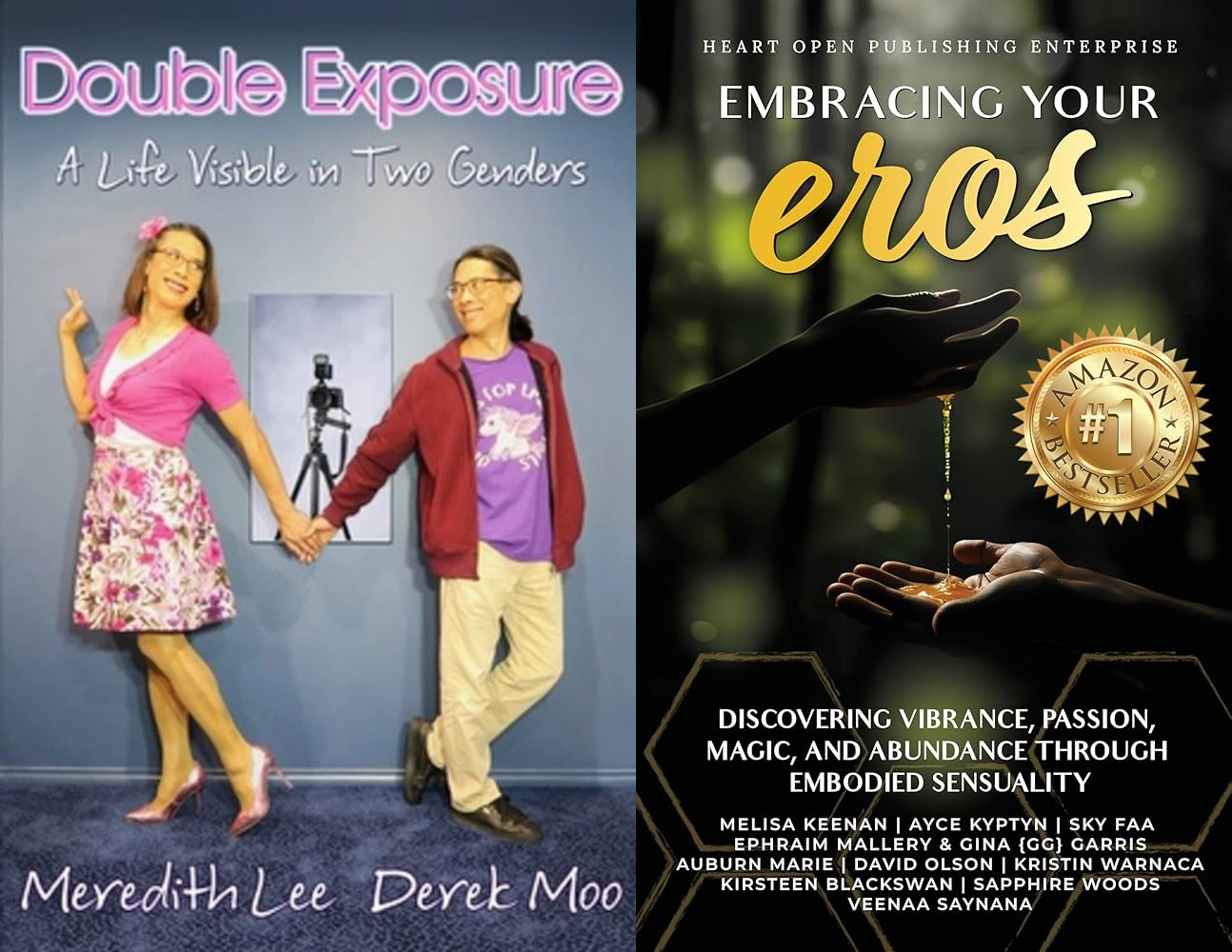 It is inevitable after decades of living a Bohemian lifestyle that one is going to meet some colourful characters, and I don't just mean poets and artists, although they make up a fair portion of our subjects. It's the queers that I speak of, those for whom their assumed gender doesn't match their sense of self, those who are same-sex attracted, those who practise ethical non-monogamy, those who have kinks and fetishes, and, of course, the sex-workers. My political sensibilities have always advocated respecting such choices, and my personal sense has been toward a sympathetic understanding. Too often, attempts to psychologise or apply sociological explanations to such people become prescriptive, denying their individuality and agency, and sometimes are downright cruel. But one sociological fact is certain: both transgender people and sex workers are two groups that are subject to discrimination and violence, even in those societies where they have formal legal protection and equality. It is with this in mind that I'm writing two short reviews from friends of mine: "Double Exposure: Life in Two Genders" by Meredith Lee and Derek Moo, and a chapter of "Embracing Your Eros" by Sapphire Woods.
 Across multiple disciplines (e.g., archeology, architecture, physics, psychology, sociology), "phenomenology" refer to the experiental and, unsurprisingly, it is a core branch of philosophy where the contributions of Husserl, Heidegger, Merleau-Ponty and Ihde are particularly notable and, in my opinion, Ricoeur's unifiction of phenonmeology with the the interpretative methods of hermeneutics ("hermeneutic phenomenology").
 I give thanks to David Miller for inviting me to present here today on the topic "Stoicism, Daoism, and Apathy" and I'm glad that my audience was sufficiently bothered to attend! David, of course, is deserving of some praise organising these "philosophy of the street" lectures for many decades now, whether it is through the title of the Existentialist Society, the Atheist Society, the Agnostic Society, the Sea of Faith in Australia, and more. He has even seen fit to invite me along to speak at these events on several occasions, including on such riveting topics as "The Phenomenology of Technology", way back in 1995, but more recently "Do We Have Enough Time? A Eudaimonic Answer" in June 2024, "From Stoicism and Naturalistic Pantheism to Effective Altruism" in April 2022, "Pantheism: Beyond Atheism and Theism" in July 2021, and "The Continuum of Needs and Wants" in November 2020. There have been many others, of course, but the aforementioned presentations are part of an ongoing research and related research project, relevant to today's topic.
 For most of the twentieth century, belief in a flat earth was in serious decline due to a lack of evidence. Today, thanks to the disruptive and often ridiculous power of the Internet, there is an amusing increase, with three common types of adherents. Those who engage with the idea as a bit of a harmless joke, those who engage in classic trolling pretending to be flat-earthers whilst secretly testing the knowledge of their interlocuter, and those who literally believe in it. Surprisingly, most "flerfers"
  For most of the last two decades, I've had a "somewhat larger" physique, usually around the 100-110kgs mark. This did peak at 120kg about five years ago and, following a negative health assessment, I attacked the problem like an angry bear and shed 25kgs in six months. Unfortunately, this did not last and my weight levels crept up again.
 In the past six months, I have lost 20kg. It is true that in the few months prior to that I had put on 10kg and, already chonky, that was not healthy. For context, I was spending a lot of time with a rather fabulous woman, and various culinary and other hedonistic indulgences took the better of me. A flip-side to my driven dysthymia is that if I am feeling happy, I can become a bit lazy, at least by my standards, and that's something I have to be aware of. Anyway, I realised what was going on, so I started being a lot more attentive to exercise (weights, running, cycling) and diet (vegetables, fibre, protein), which really amped up a level in October when I decided to seriously really pull back